7-Day Serengeti Wildebeest Calving & Ngorongoro Crater Luxury Safari


Overview
Our 7-Day Serengeti Wildebeest Calving & Ngorongoro Crater Luxury Safari takes you into the heart of northern Tanzania during one of the most fascinating periods of the wildlife calendar. We combine the elephant country of Tarangire National Park, the wildebeest calving grounds of Ndutu and the remarkable wildlife habitat of Ngorongoro Crater in a private seven-day journey that starts and ends in Arusha.
We designed this safari for travellers who want more than a quick visit to the Serengeti. During the calving season, the southern Serengeti ecosystem becomes an important gathering area for wildebeest, and the open plains around Ndutu provide opportunities to observe large herds, newborn calves and predators moving through the grasslands. By including time in Ndutu rather than passing through for only a few hours, we give you more opportunities to explore different areas and follow the wildlife conditions during your visit.
Our journey also includes Tarangire National Park, known for its elephants and distinctive baobab landscapes, and Ngorongoro Crater, where grasslands, wetlands and woodland support a diverse range of wildlife. These destinations offer different experiences, making the seven-day itinerary suitable for couples, photographers, wildlife enthusiasts and travellers looking for a private luxury safari in Tanzania.
We begin and finish in Arusha, allowing you to connect the safari with an international arrival through Kilimanjaro International Airport or a separately arranged domestic flight. Throughout the journey, we organise the route around your confirmed travel dates, accommodation arrangements and wildlife priorities.
Safari price: From US$4,150 per person
Duration: 7 days and 6 nights
Safari type: Private luxury safari
Start and end point: Arusha, Tanzania
Main destinations: Tarangire National Park, Ndutu and the southern Serengeti ecosystem, Ngorongoro Crater
Recommended season: January to March for the Ndutu calving season
Best suited to: Couples, wildlife photographers, honeymooners and travellers seeking a private northern Tanzania safari
The final quotation depends on your travel dates, group size, accommodation availability and confirmed package inclusions.
Why we designed this safari around the wildebeest calving season
The wildebeest migration is one of the most remarkable wildlife movements in Africa. Large herds move through the Serengeti ecosystem in response to rainfall, grazing conditions and the availability of fresh grass. Their location changes throughout the year, which means the best safari route depends partly on when you travel.
During the calving season, many wildebeest gather on the short-grass plains of the southern Serengeti ecosystem, particularly around Ndutu. January, February and March are commonly considered the main months for planning a calving-season safari, although the precise timing varies with rainfall.
For us, the important point is not simply to take you to the Serengeti. It is to plan your route around the wildlife experience you want to prioritise. A safari designed for calving season needs to allow sufficient time in the southern ecosystem instead of spending most of the week travelling between distant destinations.
We therefore allocate two nights to the Ndutu area in this itinerary, with wildlife viewing on arrival and a full day dedicated to exploring the plains. This arrangement gives us more flexibility to look for herds in different locations, subject to road conditions, access regulations and the time available.
The calving season is also interesting because the wildlife experience is not limited to the wildebeest themselves. Newborn calves attract the attention of predators, and lions, cheetahs, hyenas and other carnivores may be encountered in the same landscape. Their behaviour is unpredictable, however, and we cannot promise a particular hunt, birth or predator sighting.
We use the information available during your safari to make sensible decisions about where to explore. Our aim is to give you time to observe wildlife naturally, rather than rushing from one sighting to another simply to cover distance.
What makes Ndutu important during calving season?
Ndutu lies within the wider southern Serengeti ecosystem, close to the boundary between the Serengeti and Ngorongoro conservation landscapes. The area is known for open plains that can provide favourable grazing conditions for migratory wildebeest during the calving season.
The grasslands are important because the quality and availability of grazing influence where the herds gather. Rainfall changes from year to year, so the concentration of wildebeest is not identical every season. Some areas may attract large herds while others are quieter, depending on recent weather and the movement of the animals.
When we explore Ndutu, we look for more than a single famous animal. Large herds moving across the plains, calves staying close to their mothers, zebras grazing nearby and predators searching for opportunities can all contribute to the experience. The open landscape also creates opportunities for photography, especially when light conditions are favourable.
The area can be particularly rewarding for travellers interested in animal behaviour. Watching a herd move across a plain or observing how a mother protects her calf can provide a different experience from simply ticking off a list of wildlife species.
However, nature does not follow a fixed itinerary. A location that produced excellent sightings yesterday may be quieter today. We therefore keep the game drives flexible wherever practical, allowing our guide to respond to conditions while respecting park regulations and wildlife.
Our two-night stay in Ndutu is intended to provide time for this type of exploration. It does not guarantee that the herds will be directly outside your camp or that you will witness a birth. Instead, it gives us a practical opportunity to explore the area during the season when wildebeest calving is commonly expected.
Our seven-day safari itinerary
Day 1: Arrival in Arusha — welcome to Tanzania
We begin your safari in Arusha, the main base for many northern Tanzania wildlife journeys. Depending on your flight arrangements, we organise your transfer from Kilimanjaro International Airport or Arusha Airport to your accommodation.
After a long international flight, we recommend allowing time to rest before beginning the road journey. Your first evening is an opportunity to settle in, discuss the itinerary and confirm any practical details about the coming days.
We can review your accommodation arrangements, expected departure times, dietary requirements and any special interests you want us to consider. If you are travelling with photography equipment, children or particular luggage requirements, this is also a useful time to confirm the arrangements.
Arusha provides a comfortable starting point because it allows us to organise the safari before heading towards the national parks. The town sits near the foothills of Mount Meru and serves as a gateway to several of Tanzania's best-known northern wildlife destinations.
Your first night is spent in Arusha at the accommodation confirmed in your quotation.
Accommodation: Arusha
Meals: According to your confirmed package
Main activity: Arrival, transfer and safari briefing
Day 2: Tarangire National Park — elephants and baobab landscapes
After breakfast, we leave Arusha and travel towards Tarangire National Park. The drive generally takes around 2.5 to 3 hours in suitable road conditions, although traffic, weather and the exact starting point can affect the journey.
Tarangire provides a distinctive introduction to Tanzania's wildlife. Its landscape includes open savannah, woodland, seasonal wetlands and the large baobab trees that have become one of the park's recognisable features.
The Tarangire River is an important part of the park's ecology. During drier periods, wildlife may concentrate around remaining water sources, creating opportunities to observe elephants, zebras, wildebeest, buffalo and other animals. Tarangire is particularly well known for its elephants, although the number of animals seen on any particular day varies.
We spend the day exploring suitable areas of the park with our safari guide. The exact route depends on wildlife movements, road conditions and the time available before we leave the park. We also allow time to appreciate the scenery instead of treating the game drive as a race to find as many species as possible.
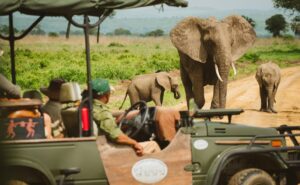
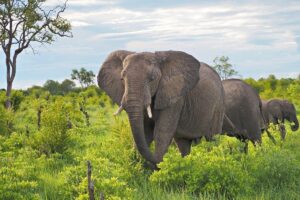
Elephants are often a highlight in Tarangire. You may see family groups feeding, walking between trees or approaching water. Their behaviour can be fascinating to observe from a safe distance, particularly when young elephants remain close to adults.
The baobab landscape provides another reason to visit. These large trees create a striking contrast with the surrounding grassland and woodland, giving Tarangire a different appearance from the open plains of Ndutu.
After our game drive, we continue to the lodge or camp selected for the itinerary. We confirm the property according to your preferred accommodation standard and availability for your dates.
Accommodation: Tarangire area
Meals: According to your confirmed package
Main activities: Game drive, elephant viewing and landscape photography
Day 3: Tarangire to Ndutu — travelling towards the calving grounds
After breakfast, we begin the journey towards Ndutu and the southern Serengeti ecosystem. This is an important transition day because we move from Tarangire's woodland and baobab scenery towards the more open landscapes associated with the wildebeest calving season.
Driving time varies according to the route, road conditions, wildlife stops and the location of your accommodation. The journey is not simply a transfer between hotels; the changing landscape helps introduce you to the scale of northern Tanzania's wildlife areas.
As we approach Ndutu, the plains become more open and the scenery changes. During the calving season, migratory herds may be spread across different parts of the ecosystem. Their exact location depends on rainfall and grazing conditions, so we use the time and information available to decide where a game drive may be worthwhile.
If our arrival time and conditions allow, we can include wildlife viewing on the way to your accommodation. The amount of game-drive time on this day depends on the final route and the distance to your camp.
Our accommodation is selected according to the agreed itinerary and availability. For a calving-season safari, location matters because it affects how much time we can spend exploring the wildlife areas and how much time is required for daily transfers.
After arriving, you can settle in, enjoy your evening meal and prepare for the following day's full safari in Ndutu.
Accommodation: Ndutu area
Meals: According to your confirmed package
Main activities: Scenic journey, arrival in the calving-season area and possible game viewing
Day 4: Full-day Ndutu safari — searching for wildebeest and predators
We dedicate this day to exploring Ndutu and the surrounding wildlife-viewing areas. The calving season is the main reason for including this destination, and a full day gives us time to search across different parts of the landscape.
Wildebeest are the principal focus, but we also look for zebras, gazelles, giraffes where present, and predators such as lions, cheetahs and hyenas. The species encountered depend on the location of the animals and the conditions on the day.
During calving season, many wildebeest calves are born within a relatively short period. The abundance of young animals can attract predators, although sightings of births or hunts are never guaranteed. We do not direct wildlife or interfere with animal behaviour; our role is to locate suitable viewing opportunities while following the applicable rules.
The open plains can provide good visibility when grass conditions are favourable. This can be useful for observing herds at a distance, watching animals move between grazing areas or photographing wildlife against the wider landscape.
We also pay attention to the smaller details. A calf following its mother, a herd changing direction or a predator resting in the grass may be just as memorable as seeing a large group of animals together. Wildlife viewing is often most rewarding when there is time to observe what is happening rather than moving immediately to the next sighting.
We plan breaks according to the day's route and arrangements. The precise schedule depends on wildlife activity, driving conditions, permitted areas and your accommodation's arrangements.
At the end of the day, we return to our Ndutu camp or lodge for dinner and overnight accommodation.
Accommodation: Ndutu area
Meals: According to your confirmed package
Main activities: Full-day game drive, wildebeest viewing and predator searches
Day 5: Further wildlife viewing in Ndutu and travel to the Ngorongoro Highlands
We begin the day with further wildlife viewing in the Ndutu area, allowing another opportunity to explore the plains before leaving the southern ecosystem.
We cannot predict exactly where the herds will be on this morning. If wildebeest are concentrated in one area, our guide can assess whether it is practical to explore nearby locations or continue searching for other wildlife. If the area is quieter, we can use the available time to explore suitable habitats and enjoy the landscape.
After our planned wildlife viewing, we travel towards the Ngorongoro Highlands. This journey introduces a change in scenery, from the open plains of Ndutu to the higher ground around the Ngorongoro Conservation Area.
The overnight location is selected according to the confirmed itinerary. Staying in a suitable location near the crater helps organise the following day's visit, although the exact driving time and departure schedule depend on the camp or lodge selected.
This day also provides a natural transition between the two main wildlife experiences of the itinerary. Ndutu is associated with seasonal herds and open grasslands, while Ngorongoro offers a compact but varied wildlife habitat inside a volcanic caldera.
We spend the evening at our selected accommodation, prepare for an early start and confirm the following day's arrangements.
Accommodation: Ngorongoro area
Meals: According to your confirmed package
Main activities: Morning wildlife viewing and transfer towards Ngorongoro
Day 6: Ngorongoro Crater — a full wildlife landscape within a caldera
We start early for our visit to Ngorongoro Crater. The crater is one of Tanzania's most distinctive wildlife destinations, with grasslands, woodland, wetlands and water sources supporting a wide range of animals within the caldera.
After completing the required formalities, we descend into the crater for a game drive. The route and time available are governed by conservation-area regulations, road conditions and the applicable permit arrangements.
Wildlife sightings can include lions, buffalo, zebras, wildebeest, elephants and other species. Black rhinos live in the wider conservation area, but they are not guaranteed sightings. The experience depends on where animals are located and how they move throughout the day.
The varied habitat is one of the crater's main attractions. Open grassland can make some animals easier to spot, while woodland and wetland areas provide different viewing conditions. Water sources can attract wildlife, particularly when conditions elsewhere are drier.
We approach the crater as a wildlife ecosystem rather than a guaranteed checklist of species. Some days produce numerous sightings across several habitats; on other days, animals may be more dispersed or less visible. Our guide helps interpret the landscape and explain the behaviour of the animals we encounter.
We follow all applicable rules while inside the conservation area, including restrictions on vehicle movement, designated routes and permitted activities. These regulations help manage visitor activity and protect the environment.
After the crater game drive, we leave the crater and return to our accommodation. The evening provides time to relax after an early start and prepare for the return journey to Arusha.
Accommodation: Ngorongoro area
Meals: According to your confirmed package
Main activities: Ngorongoro Crater game drive and wildlife observation
Day 7: Return to Arusha — the end of our safari
After breakfast, we travel back to Arusha. The journey time depends on the location of your accommodation, road conditions and the transfer arrangements confirmed for your trip.
If you have an onward flight, we coordinate the departure plan with your flight schedule and allow sufficient time for the journey and airport procedures. International flights, domestic flights and transfers should be confirmed separately unless they are specifically included in your quotation.
Your safari ends in Arusha after seven days of exploring Tarangire, Ndutu and Ngorongoro. If you are extending your stay in Tanzania, we can discuss your preferred arrangements before the booking is finalised.
Accommodation: No overnight stay included on Day 7 unless separately arranged
Meals: According to your confirmed package
Main activity: Return transfer to Arusha
How much does our 7-day luxury safari cost?
Our 7-Day Serengeti Wildebeest Calving & Ngorongoro Crater Luxury Safari is priced from US$4,150 per person as a starting package rate. The final amount depends on your travel dates, number of travellers, accommodation availability and the services included in your booking.
The calving season can be a high-demand period for accommodation in and around Ndutu. The location and standard of the camp or lodge can make a considerable difference to the overall price. We therefore confirm accommodation availability and the relevant costs before finalising your quotation.
The number of travellers also affects the per-person price of a private safari. Vehicle and guide costs are shared across the booking, while accommodation charges depend on room arrangements and the applicable rates. The final price for a couple may therefore differ from the per-person rate for a larger group.
Park and conservation charges are another important part of the calculation. Tariffs can vary by destination, visitor category, vehicle arrangements and the regulations applicable on the travel date. Ngorongoro Crater visits also involve specific conservation-area and crater-service arrangements that must be accounted for in the final quotation.
When we prepare your price, we consider the accommodation, vehicle, professional guiding, route, meals, transfers and applicable fees. We also identify exclusions clearly so that you understand the total cost before confirming the booking.
For the most accurate quote, tell us your preferred dates, number of adults and children, accommodation preferences and whether you require airport transfers. We can then confirm the rate applicable to your itinerary.
What is included in our safari package?
The exact inclusions are confirmed in your written quotation. Depending on the agreed package, the safari can include the following services.
Accommodation for six nights. We arrange the overnight stays according to the itinerary, with the selected properties and room arrangements confirmed before booking.
Private safari vehicle. The itinerary is designed around private travel rather than joining an unrelated group. Vehicle type and capacity are confirmed according to your group size and the final package.
Professional driver-guide. Your guide accompanies the safari and helps plan wildlife-viewing routes, explain animal behaviour and manage the journey between destinations.
Game drives in the listed destinations. The itinerary includes planned wildlife viewing in Tarangire, Ndutu and Ngorongoro Crater, subject to park regulations, opening arrangements and the time available.
Meals. Meals are provided according to the accommodation and meal plan specified in your quotation. We confirm which breakfasts, lunches and dinners are included.
Park and conservation fees. Applicable fees can be included in the package price when stated in the quotation. We specify the relevant charges rather than leaving you to assume that every fee is covered.
Transfers. Transfers between Arusha and the safari destinations are arranged as described in the final itinerary. Airport transfers are included only where the quotation explicitly confirms them.
Drinking water during safari activities. Water arrangements are confirmed in the package details.
We recommend reviewing the written quotation carefully before payment. This makes it clear which services have been priced and avoids misunderstandings about accommodation, park fees, drinks, transfers or optional activities.
What is not included unless confirmed?
International flights to and from Tanzania are normally arranged separately unless your quotation expressly includes them. Visa costs, travel insurance, personal purchases, tips, premium drinks and optional activities may also be excluded.
Additional nights in Arusha, private airport transfers outside the agreed arrangements, special accommodation upgrades and changes to the itinerary can affect the total price.
If you want to include a domestic flight, balloon safari or another activity, tell us before we finalise the booking. We can check whether it fits the route, schedule and available budget. Optional activities are subject to availability and their own terms.
We encourage travellers to confirm the payment schedule, cancellation terms, refund conditions and any applicable changes in writing before making a payment. These details should form part of the booking confirmation.
Where will we stay during the safari?
Accommodation is an important part of a luxury safari because it affects comfort, driving time and how easily we can reach wildlife-viewing areas. For this itinerary, we arrange six nights across Arusha, Tarangire, Ndutu and the Ngorongoro area.
The first night is in Arusha, where you can rest after arrival. On the second night, we stay in the Tarangire area, allowing us to explore the park before continuing towards Ndutu. We then allocate two nights to Ndutu, which helps us spend meaningful time in the calving-season landscape.
The final two nights are arranged around the Ngorongoro portion of the route, with the exact locations depending on the accommodation selected and the confirmed itinerary. The schedule must be planned carefully to make the crater visit practical without creating unnecessary driving.
Luxury accommodation in northern Tanzania can include lodges and tented camps, but the exact facilities differ from property to property. Some provide spacious rooms or tents, private bathrooms, dining facilities and lounge areas, while other properties may offer additional services or different room layouts.
We confirm the actual property names, room category, meal plan and location before the booking is finalised. We do not treat the word “luxury” as a substitute for describing the accommodation you will receive. If you have a preferred style of stay, tell us whether you want a lodge, tented camp or a particular level of privacy and comfort.
Availability is especially important during popular wildlife seasons. A property may be unavailable for your dates even when the destination itself remains accessible. In that situation, we should discuss alternatives and any price difference with you before making a change.
When is the best time to book this safari?
For travellers whose main goal is wildebeest calving, we generally recommend considering January, February or March. These months are commonly associated with calving activity in the Ndutu and southern Serengeti ecosystem, but the actual distribution of the herds changes with rainfall.
January may offer opportunities to see herds gathering on suitable grasslands, while February is often associated with the main calving period. March can also provide wildlife-viewing opportunities, although rainfall and changing grazing conditions may influence where the animals are found.
We do not recommend choosing dates solely because a calendar says that calving season has started. The wildlife follows natural conditions rather than fixed schedules. We use your dates to plan the route and accommodation, while recognising that no itinerary can guarantee the location of the herds.
If you are travelling specifically for photography, let us know what matters most to you. You may want to prioritise time in Ndutu, flexibility during game drives and accommodation that reduces unnecessary transfers. We can discuss these priorities before confirming the final schedule.
If your travel dates are fixed, we can build the itinerary around them and explain what is realistic for that period. If your dates are flexible, we can discuss the advantages of different departure windows and the availability of suitable accommodation.
Why we include Tarangire before Ndutu
Tarangire provides a different wildlife experience from the calving-season plains. Its baobab trees, woodland and river landscapes create a distinctive setting, and the park is particularly known for elephants.
The timing of your visit influences what you may see. Wildlife often concentrates around available water sources during drier periods, but animal movements change throughout the year. We therefore plan the game drive around conditions rather than promising a specific number of sightings.
Including Tarangire also creates variety within the itinerary. Rather than spending the entire week in similar landscapes, you experience a park with its own scenery and wildlife patterns before moving into the open grasslands of Ndutu.
This variety is useful for travellers who want a broader introduction to northern Tanzania. It also gives us a structured route between Arusha and the southern Serengeti ecosystem, subject to the actual accommodation locations and road conditions.
Why we include Ngorongoro Crater
Ngorongoro Crater offers a different setting from both Tarangire and Ndutu. Its volcanic landscape contains a mixture of grassland, woodland and wetlands, providing habitats for many wildlife species.
The crater is not simply another stop on the route. Its varied habitats and relatively contained geography can provide opportunities to observe several types of animals during a single game drive. Lions, buffalo, zebras, wildebeest and other wildlife may be encountered, depending on conditions.
Elephants can also be seen in the conservation area, while black rhinos are present but difficult to guarantee as a sighting. We explain these differences honestly because wildlife viewing depends on the animals' movements and visibility.
The crater visit is subject to applicable rules, permitted hours, vehicle arrangements and conservation charges. We plan the day around the official requirements and confirm the relevant fees in the final quotation.
What should you pack for a luxury safari?
We recommend packing comfortable clothing suitable for early mornings, warm afternoons and changing conditions. Temperatures can differ between the open plains, the highlands and the time of day, so bringing a light warm layer is useful.
Neutral-coloured clothing is practical for safari activities. Comfortable walking shoes, a hat, sunglasses, sunscreen and insect repellent are also useful. Binoculars can help you observe wildlife at a distance, while a camera with a suitable zoom lens is valuable for photography.
Bring any essential personal medication and keep important travel documents accessible. If you have camera batteries, chargers or other electronic equipment, check the charging arrangements at your selected accommodation before departure.
A soft-sided bag can be easier to manage on some safari vehicles than a large rigid suitcase, but luggage requirements depend on the vehicle and any domestic flights included in your arrangements. Tell us in advance if you have unusually large luggage or specialist equipment.
You do not need to bring every possible accessory. The most useful items are those that keep you comfortable, protected from the sun and prepared for early departures and long periods of wildlife viewing.
Is this safari suitable for couples and honeymooners?
Yes. Our private seven-day itinerary can suit couples who want to explore Tanzania at their own pace and stay in comfortable accommodation. The combination of Ndutu, Tarangire and Ngorongoro provides variety without requiring a different destination every day.
For honeymooners, accommodation choice can be particularly important. If you want a more private or special stay, tell us before booking so we can check available room categories and any additional costs. Special arrangements should be confirmed in writing rather than assumed to be part of a standard package.
The safari can also appeal to photographers and wildlife enthusiasts who want to dedicate time to Ndutu. However, the route includes driving between destinations, and some days involve longer transfers than others. We discuss the pace and overnight locations before finalising the itinerary.
Is this safari suitable for families?
Families may enjoy the wildlife variety, but suitability depends on the children's ages, travel tolerance and accommodation requirements. Some days involve substantial driving, and early departures may be needed to make the most of wildlife-viewing time.
If you are travelling with children, tell us their ages when requesting a quotation. We can review accommodation arrangements, vehicle capacity, meal requirements and the pace of the itinerary. Child rates, applicable conservation charges and room arrangements must be checked against the current rules and the selected properties.
Parents should also consider how comfortable their children are with long game drives and the unpredictability of wildlife viewing. Animals may be visible for long periods, while other stretches of a game drive may involve travelling between locations or waiting for sightings.
We can discuss adjustments to the daily schedule where practical, but any change to the route or overnight arrangements may affect the price.
How we plan wildlife viewing during the safari
Our itinerary provides a framework, but wildlife viewing requires flexibility. Animals move in response to food, water, weather, territorial behaviour and other natural conditions. A route that works well on one day may not be the best choice the following day.
In Ndutu, we use the available time to explore suitable wildlife-viewing areas and respond to information about herd movements. In Tarangire, we consider the park's habitats and water sources. In Ngorongoro Crater, we follow the permitted routes and the time allowed for the visit.
We do not guarantee that a particular animal will appear. Instead, we focus on providing time, a planned route and knowledgeable guiding to improve the opportunity for wildlife encounters.
Respect for wildlife is central to a responsible safari. We follow the applicable park rules, remain within permitted areas and avoid disturbing animals for photographs. Wildlife should be observed on its own terms, and the safety of visitors and animals comes first.
Frequently asked questions about our 7-day luxury safari
Does the safari start and end in Arusha?
Yes. We plan the itinerary to start and finish in Arusha. Airport transfers can be arranged according to your arrival and departure details and are included only when specified in the final quotation.
How many nights are included?
The itinerary covers seven days and six nights. The overnight locations are arranged across Arusha, Tarangire, Ndutu and the Ngorongoro area, with the exact properties confirmed before booking.
Can we see newborn wildebeest?
It is possible during the calving season, especially when herds are concentrated around Ndutu. However, births are natural events and cannot be guaranteed. The exact location and timing of the herds depend on rainfall and grazing conditions.
Will we see lions and cheetahs?
Lions and cheetahs occur in the wider ecosystem, and the calving season can attract predators to areas where wildebeest gather. Sightings depend on location, timing and visibility, so we cannot guarantee a particular species.
Will we see the Big Five?
The itinerary visits wildlife areas where several iconic African species can be found, but seeing all five animals is not guaranteed. Black rhinos, in particular, can be difficult to locate even in areas where they live.
Is the safari private?
The itinerary is designed as a private safari. The vehicle arrangements, passenger capacity and guiding services are confirmed in your quotation according to your group size.
Is accommodation included?
Six nights of accommodation are included only as specified in your confirmed package. We provide the names or agreed categories of the properties, room arrangements and meal plan before the booking is finalised.
Are park fees included in the price?
We clearly state the park and conservation charges included in your quotation. Fees depend on the destination, visitor category, vehicle arrangements and applicable tariffs. Ngorongoro Crater visits have specific service and permit arrangements that must be checked when pricing the safari.
Can we add a balloon safari?
A balloon safari may be possible in suitable locations and dates, subject to availability and the activity provider's conditions. It is an additional activity unless specifically included in your quotation. Tell us before booking so we can check whether it fits the itinerary.
Can we change the accommodation?
We can review alternative accommodation according to your preferences and availability. Any upgrade, substitution or change in location may affect the price and driving schedule. We confirm changes with you before finalising the booking.
What happens if the wildebeest are not in Ndutu?
Wildlife movements depend on natural conditions, so the herds may not be in the exact area expected when you travel. We plan for the seasonal pattern but cannot control it. Our guide will use the available information to explore suitable areas, subject to access rules and the time available.
Should we book in advance?
We recommend contacting us early for travel during the calving season, especially if you want specific accommodation or have fixed dates. Early planning gives us more time to check availability and confirm a suitable route. A booking is not confirmed until the required arrangements and payment terms have been agreed.
Book our 7-Day Serengeti Wildebeest Calving & Ngorongoro Crater Luxury Safari
We created this safari for travellers who want to explore northern Tanzania with a particular focus on the wildebeest calving season. By combining Tarangire, Ndutu and Ngorongoro Crater, we offer a journey through different landscapes and wildlife habitats within seven days.
Our priority is to plan the route around your travel dates, confirm suitable accommodation and explain the costs and inclusions clearly before you book. We also want you to understand what makes the calving season special while recognising that wildlife movements are natural and sightings cannot be guaranteed.
To request your safari quotation, send us your preferred travel dates, number of adults and children, accommodation preferences and arrival details. Tell us if you are travelling for a honeymoon, wildlife photography or another special occasion so we can review the arrangements with you.
We will confirm the available accommodation, final itinerary, applicable fees, package inclusions and total price before your booking is finalised.
Travel with Mikumi Safari Tours and experience Tanzania's northern wildlife circuit on our 7-day private luxury safari.
Included/Excluded
- Private 4x4 safari vehicle
- Professional English-speaking safari guide
- Accommodation for 4 nights
- Meals as specified in the itinerary
- Mikumi National Park game drives
- Ruaha National Park game drives
- Guided hiking activity in Udzungwa Mountains
- National park entrance and conservation fees
- Drinking water during safari
- International flights
- Domestic flight from Ruaha to Dar es Salaam
- Visa fees
- Travel insurance
- Alcoholic and personal drinks
- Personal expenses
- Tips for safari guides and lodge staff
- Laundry services
Calendar & Prices
General
General
General
General
General
General
General
General
General
General
General
General
General
General
General
General
General
General
General
General
General
General
General
General
General
General
General
General
General
General
General
General
General
General
General
General
General
General
General
General
General
General
General
General
General
General
General
General
General
General
General
General
General
General
General
General
General
General
General
General
General
General
General
General
General
General
General
General
General
General
General
General
General
General
General
General
General
General
General
General
General
General
General
General
General
General
General
General
General
General
General
General
General
General
General
General
General
General
General
General
General
General
General
General
General
General
General
General
General
General
General
General
General
General
General
General
General
General
General
General
General
General
General
General
General
General
General
General
General
General
General
General
General
General
General
General
General
General
General
General
General
General
General
General
General
General
General
General
General
General
General
General
General
General
General
General
General
General
General
General
General
General
General
General
General
General
General
General
General
General
General
General
General
General
General
General
General
General
General
General
General
General
General
General
General
General
General
General
General
General
General
General
General
General
General
General
General
General
General
General
General
General
General
General
General
General
General
General
General
General
General
General
General
General
General
General
General
General
General
General
General
General
General
General
General
General
General
General
General
General
General
General
General
General
General
General
General
General
General
General
General
General
General
General
General
General
General
General
General
General
General
General
General
General
General
General
General
General
General
General
General
General
General
General
General
General
General
General
General
General
General
General
General
General
General
General
General
General
General
General
General
General
General
General
General
General
General
General
General
General
General
General
General
General
General
General
General
General
General
General
General
General
General
General
General
General
General
General
General
General
General
General
General
General
General
General
General
General
General
General
General
General
General
General
General
General
General
General
General
General
General
General
General
General
General
General
General
General
General
General
General
General
General
General
General
General
General
General
General
General
General
General
You may like