Ruaha National Park is one of the most impressive safari destinations in Tanzania and one of the best places to experience the country’s southern wilderness. The park is known for its large elephant population, powerful lion prides, African wild dogs, greater kudu, baobab-covered landscapes, and the Great Ruaha River. It also offers a quieter safari experience than some of Tanzania’s more famous northern parks.
Covering about 20,226 square kilometers, Ruaha is Tanzania’s second-largest national park. Its enormous size allows wildlife to thrive across a mixture of open savannah, woodland, rocky areas, seasonal rivers, and baobab-studded plains. The park is part of the larger Ruaha-Rungwa ecosystem, making it an important wildlife area in southern Tanzania.
A Ruaha safari is especially appealing to travelers who want more than the traditional Big Five experience. The park combines excellent wildlife viewing with dramatic scenery, fewer crowds, walking safaris, birdwatching, photography, and a strong feeling of being in a remote African wilderness.
This complete Ruaha National Park guide explains everything you need to know before planning your trip. It covers the park’s location, wildlife, best time to visit, things to do, accommodation, transportation, safari costs, recommended number of days, packing advice, and suggested itineraries.
What Makes Ruaha National Park Special?
Ruaha is special because of its combination of wilderness, wildlife, scenery, and relatively low visitor numbers. While destinations such as Serengeti and Ngorongoro receive large numbers of safari visitors, Ruaha often feels much more spacious and peaceful. You can spend hours exploring the park without encountering the same concentration of vehicles found in some of Tanzania’s northern safari areas.
The park is also famous for its elephants. Large herds are regularly seen moving through the savannah and woodland, particularly during the dry season when wildlife becomes more concentrated around reliable water sources. Lions are another major attraction, and Ruaha is also considered one of the better places in Tanzania to look for African wild dogs.
Another reason to visit is the landscape. Ruaha is not simply a flat grassland. The scenery changes between open plains, rocky hills, woodland, rivers, and enormous baobab trees. These different environments create a visually impressive safari and provide habitats for a wide variety of animals and birds.
Ruaha also sits in a region where eastern and southern African wildlife characteristics overlap. This contributes to the presence of species that are not always associated with the northern safari circuit, including greater kudu, sable antelope, and roan antelope.
Where Is Ruaha National Park Located?
Ruaha National Park is located in south-central Tanzania, within the southern safari circuit. The park is associated with Iringa Region and lies west of Iringa town. Its location makes it different from the northern safari destinations around Arusha, such as Serengeti, Ngorongoro, and Tarangire.
The park’s position is one reason it receives fewer visitors than some of Tanzania’s most famous destinations. It is farther from the main northern safari circuit, which means travelers generally need to plan a dedicated southern Tanzania itinerary.
Ruaha’s location also makes it possible to combine the park with other southern destinations. Depending on your route, you can combine Ruaha with Nyerere National Park, Mikumi National Park, Udzungwa Mountains, or other attractions in southern Tanzania.
For travelers who prefer a quieter safari and have enough time for a southern circuit, Ruaha can be an excellent choice.
How Big Is Ruaha National Park?
Ruaha National Park covers approximately 20,226 square kilometers, making it Tanzania’s second-largest national park. Its size is one of the defining features of the destination and helps create the feeling of a genuine wilderness area.
The park contains a variety of habitats, including open grasslands, woodland, river valleys, rocky landscapes, and areas dominated by baobab trees. These different habitats support different species and create changing scenery throughout a game drive.
Ruaha is also part of a much larger ecosystem. Wildlife can move across areas beyond the national park boundaries, connecting Ruaha with surrounding protected areas and wildlife habitats.
Because of the park’s size, visitors should not expect to see everything in one game drive. Spending several days in Ruaha gives you a better opportunity to explore different areas and encounter a wider variety of wildlife.
Wildlife in Ruaha National Park
Wildlife is the main reason most travelers visit Ruaha. The park supports a remarkable variety of mammals, including elephants, lions, leopards, cheetahs, buffaloes, giraffes, zebras, hippos, crocodiles, impala, greater kudu, lesser kudu, sable, roan, eland, waterbuck, warthogs, and African wild dogs.
Predators are particularly important to Ruaha’s safari appeal. Lions are frequently seen, while leopards and cheetahs require more patience and careful searching. African wild dogs are another major attraction, although sightings are never guaranteed because the animals move across large territories.
The park’s herbivore population provides an important food source for predators. During the dry season, animals often become concentrated around rivers and waterholes, creating excellent opportunities to observe interactions between different species.
Your guide plays an important role in finding wildlife. Experienced guides understand animal behavior and can use recent sightings, tracks, habitat, and environmental conditions to determine where to search.
Elephants in Ruaha National Park
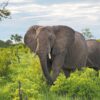
Elephants are among the most recognizable animals in Ruaha. The park is known for supporting a large elephant population, and seeing herds moving through the landscape is one of the highlights of a visit.
During the dry season, elephants often spend more time near rivers and other remaining water sources. They may drink, bathe, feed along the riverbanks, or move between water and feeding areas.
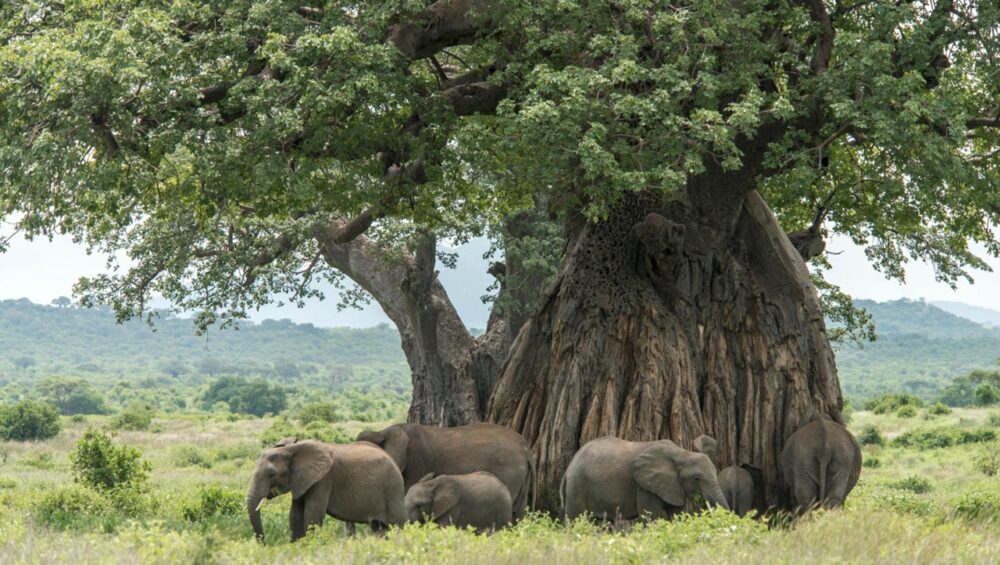
Elephants can also be found feeding among the woodland and open savannah. Watching a herd move through a landscape of baobabs can create some of the most memorable scenes of a Ruaha safari.
Visitors should always maintain a safe distance and follow the instructions of their safari guide. Elephants are wild animals, and their behavior can change quickly.
Lions in Ruaha National Park
Ruaha is an excellent destination for travelers interested in lions. The park supports strong lion populations, and prides can often be found in areas where prey is abundant.
Lions may spend much of the hotter part of the day resting in shade. Early morning and late afternoon can provide better opportunities to observe active behavior because temperatures are more comfortable.
A lion sighting can be especially interesting when you have time to observe the animals rather than simply taking a photograph and moving on. You may see a pride resting together, adults interacting with cubs, or lions beginning to move as temperatures fall.
The presence of large numbers of herbivores also helps support the park’s predator population, making Ruaha an excellent destination for travelers interested in predator behavior.
Leopards in Ruaha National Park
Leopards are present in Ruaha but are naturally more difficult to find than some of the park’s other animals. Their secretive behavior and ability to hide in vegetation make them a challenging but rewarding sighting.
They can often be associated with woodland, riverine vegetation, and areas where they can find cover. A leopard may be resting on a tree branch or lying in thick vegetation, so careful observation is important.
Experienced guides are particularly valuable when searching for leopards. They know the areas where previous sightings have occurred and understand the signs that may indicate a leopard is nearby.
A leopard sighting is often one of the most exciting moments of a safari because finding one requires patience and luck.
African Wild Dogs in Ruaha National Park
African wild dogs are one of Ruaha’s most special attractions. They are highly social predators that live and hunt in packs, and their behavior is very different from that of lions and leopards.
Wild dogs can cover large distances and do not remain in one location for long. This makes sightings unpredictable. Even when a pack has recently been seen in an area, it may have moved many kilometers by the time another safari vehicle arrives.
Ruaha’s large wilderness and suitable habitat make it an important destination for travelers hoping to see these endangered predators.
If seeing wild dogs is one of your priorities, tell your safari operator before the trip. Your guide can then pay particular attention to recent sightings and suitable habitats.
Greater Kudu in Ruaha National Park
Greater kudu is one of the most impressive antelopes found in Ruaha. Male greater kudu are especially distinctive because of their large spiral horns.
They are often associated with woodland and areas where vegetation provides cover. Their coloring can make them surprisingly difficult to spot, even when they are relatively close to the vehicle.
Ruaha is an excellent destination for travelers who are interested in antelope species beyond the animals usually associated with the Big Five.
The park also has lesser kudu, adding to its importance for wildlife enthusiasts interested in East African antelope.
Sable and Roan Antelope
Ruaha is also notable for species such as sable and roan antelope. These animals are not guaranteed sightings, but they are among the species that make the park particularly attractive to experienced safari travelers.
Finding them can require patience because they are not as commonly encountered as impala, zebra, or buffalo. Their presence, however, adds to the diversity of the Ruaha safari experience.
If you are particularly interested in rare or less frequently seen species, a longer stay gives you a better opportunity to explore different habitats and search for them.
Giraffes, Zebras and Other Herbivores
Ruaha has a wide range of herbivores. Giraffes can be seen browsing on trees, while zebras and other grazing animals move through the open plains.
Impala are particularly important because they are a common prey species for several predators. Eland, waterbuck, buffalo, warthogs, and other herbivores also contribute to the ecosystem.
These animals may not always receive as much attention as lions or elephants, but watching them can help you understand how the park functions.
A good safari is not only about finding famous species. It is also about observing how animals interact with their environment.
The Big Five in Ruaha National Park
Ruaha offers opportunities to see several of the animals traditionally known as the Big Five. Elephants, buffaloes, lions, and leopards are present in the park.
Rhinoceros are not a defining feature of Ruaha, and travelers should not choose the park specifically for rhino viewing.
For many visitors, this is not a major disadvantage. Ruaha’s appeal lies in its overall wildlife diversity and wilderness atmosphere. The opportunity to see elephants, large lion prides, wild dogs, kudu, and other southern species can be more important than completing a Big Five checklist.
If your main priority is a broad wildlife experience with fewer crowds, Ruaha can be an excellent choice.
The Great Ruaha River
The Great Ruaha River is one of the most important natural features of the park. It provides water for wildlife and plays a major role in the ecosystem.
During the dry season, water becomes increasingly limited. Wildlife therefore becomes more dependent on the river and other remaining water sources.
This concentration can create excellent wildlife viewing opportunities. Elephants, hippos, crocodiles, birds, and other animals can be found around river areas.
Predators also benefit indirectly because prey animals need to visit the same water sources. This can make areas around the river productive for game drives.
The river is therefore more than a scenic feature. It is a major reason why wildlife patterns in Ruaha change throughout the year.
Ruaha’s Baobab Landscapes
Baobab trees are among the most recognizable features of Ruaha National Park. Their massive trunks and unusual shapes create a dramatic backdrop for wildlife photography.
A safari vehicle passing a large baobab with elephants or giraffes nearby can create an unforgettable scene.
Baobabs also demonstrate how different Ruaha is from the classic grassland landscapes associated with the Serengeti.
The combination of baobabs, golden grass, rocky hills, and wildlife gives the park a distinctive visual identity.
Miombo Woodlands
Miombo woodland covers significant parts of Ruaha and provides habitat for numerous animals and birds.
The woodland is particularly important for antelope species such as kudu. It also provides shelter and feeding opportunities for many other animals.
Game drives through woodland require careful observation because animals can be partially hidden by vegetation.
The experience is different from driving across an open plain. Wildlife may appear suddenly from behind trees, creating exciting encounters.
Best Time to Visit Ruaha National Park
Ruaha can be visited throughout the year, but the experience changes between seasons.
The dry season is generally considered the best time for concentrated wildlife viewing. As water becomes scarce, animals gather around reliable water sources, making them easier to locate.
The period from June to October is particularly popular for game viewing. Vegetation becomes less dense, roads are generally easier to navigate, and animals become more concentrated around water.
The green season offers a different experience. The landscape becomes greener, bird activity can increase, and the park can be particularly attractive for photography.
Your ideal travel period therefore depends on what you want from the safari. Travelers focused on wildlife concentration may prefer the dry season, while photographers and birdwatchers may enjoy the green season.
Visiting Ruaha During the Dry Season
The dry season is one of the strongest periods for a Ruaha safari.
As rainfall decreases, temporary water sources disappear and wildlife becomes increasingly dependent on rivers and permanent water sources.
This makes animals easier to locate.
The vegetation also becomes less dense, improving visibility.
Predators can be easier to find because prey animals are concentrated in predictable areas.
The main disadvantage is that the landscape can look dry and dusty. Temperatures can also become high during the afternoon.
Despite this, the dry season remains an excellent choice for first-time visitors whose main goal is wildlife viewing.
Visiting Ruaha During the Green Season
The green season transforms the park.
Rain brings fresh vegetation and changes the appearance of the landscape. Grass becomes greener, trees become more vibrant, and the scenery can be spectacular.
Birdwatching can also be rewarding during this period.
Migratory birds may be present, adding to the already impressive bird diversity.
The downside is that wildlife can be more dispersed because water is available across a wider area.
Some roads may also become more challenging after heavy rain.
For travelers who enjoy landscapes, photography, birds, and a quieter safari atmosphere, the green season can still be an excellent time to visit.
Ruaha National Park Weather
Ruaha generally experiences warm conditions, although temperatures vary between morning, afternoon, and evening.
Early mornings can be cool, especially during the dry season. Afternoon temperatures can become hot, while evenings may become cooler.
This makes layered clothing useful.
A light jacket can be helpful for early morning game drives. Once the sun rises, lighter clothing becomes more comfortable.
A hat, sunglasses, sunscreen, and drinking water are important throughout the year.
During the rainy season, a light waterproof jacket can also be useful.
How to Get to Ruaha National Park
Ruaha can be reached by road or air.
The best option depends on your starting point, budget, available time, and whether you are visiting other destinations in Tanzania.
Road travel is possible from Iringa and other parts of southern Tanzania. However, because Ruaha is a large and relatively remote destination, road travel can take significant time.
Flying is often the most convenient option for travelers with limited time. Safari flights can connect Ruaha with other destinations in Tanzania.
TANAPA identifies Msembe and Jongomero among the airstrips serving the park and recommends suitable 4×4 vehicles for road access, particularly during wetter periods.
How to Get to Ruaha From Dar es Salaam
Dar es Salaam is an important gateway for southern Tanzania.
Traveling to Ruaha by road from Dar es Salaam can be incorporated into a longer southern safari circuit. This can work well if you want to visit Mikumi or Nyerere National Park before continuing toward Ruaha.
For travelers with limited time, flying is more practical.
A domestic safari flight can reduce travel time considerably and allow you to spend more of your holiday inside the national park.
Your choice should depend on whether you value the road journey or want to maximize your safari time.
How to Get to Ruaha From Zanzibar
Zanzibar travelers can connect to Ruaha by air.
This is one of the easiest ways to combine a beach holiday with a southern Tanzania safari.
Instead of spending a full day traveling from Zanzibar to mainland Tanzania and then continuing by road, a flight can take you closer to the safari destination.
Fly-in safaris are particularly useful for travelers who have only a few days available.
Flight schedules vary, so it is important to confirm current routes, operating days, baggage limits, and departure times before booking.
How to Get to Ruaha From Arusha
Arusha is the gateway to Tanzania’s northern safari circuit.
Ruaha is located far to the south, so traveling between the two regions by road can take a significant amount of time.
Flying is usually more practical for travelers who want to combine northern and southern Tanzania.
A longer itinerary can include Serengeti and Ngorongoro before connecting by air to Ruaha.
This provides an opportunity to experience two very different safari environments.
How to Get to Ruaha From Moshi
Moshi is primarily known as the gateway to Mount Kilimanjaro.
Travelers who want to combine Kilimanjaro with Ruaha should plan their transportation carefully.
A road journey between Moshi and Ruaha is possible, but it is long.
Flying can reduce the travel time considerably.
A well-planned itinerary can allow you to climb Kilimanjaro first and then fly south for a Ruaha safari.
How to Get to Ruaha From Nairobi
Nairobi is an important regional travel hub, but Ruaha is located in Tanzania.
Travelers coming from Nairobi need to enter Tanzania before continuing toward the park.
Driving from Nairobi to Ruaha involves a long journey and border formalities.
For travelers with limited time, flying into Tanzania and connecting with a domestic safari flight is usually more efficient.
Ruaha can also be included as part of a longer Kenya and Tanzania itinerary.
Game Drives in Ruaha National Park
Game drives are the main activity in Ruaha.
Most visitors explore the park in a safari 4×4 with an experienced guide.
Because the park is so large, a vehicle allows you to cover significant distances and explore several habitats in one day.
Morning game drives are popular because temperatures are cooler and many animals are active.
Afternoon drives can also be productive, particularly as temperatures begin to fall.
Full-day game drives are ideal for travelers who want to explore more remote parts of the park.
Morning Game Drives
Morning is one of the best times to explore Ruaha.
The temperature is usually cooler, and many animals are active after the night.
Predators may still be hunting or moving through the landscape.
Bird activity also increases as the sun rises.
Morning light is particularly attractive for photographers.
A good guide will choose the route according to your interests and recent wildlife activity.
Afternoon Game Drives
Afternoon game drives provide another opportunity to explore the park.
As temperatures become more comfortable, animals may begin moving again.
Lions may leave shaded resting areas.
Elephants may continue feeding.
Giraffes can often be seen browsing.
The late afternoon light is also excellent for photography.
If you have several days in Ruaha, combining morning and afternoon drives gives you a broader experience of the park.
Full-Day Game Drives
A full-day game drive is ideal for travelers who want to explore a larger section of Ruaha.
The size of the park means that there is always more to discover.
A full day gives your guide time to search for particular species and travel between different habitats.
You can stop for a picnic lunch at an approved location before continuing the game drive.
This is particularly useful for travelers interested in special sightings such as wild dogs, greater kudu, sable, or roan.
Walking Safaris in Ruaha
Walking safaris provide a completely different way to experience Ruaha.
Instead of viewing the environment from a vehicle, you explore on foot with an authorized guide or ranger.
The focus is often on smaller details.
You can learn to recognize animal tracks, identify plants, understand bird calls, and observe signs of wildlife activity.
Walking also gives you a stronger sense of the landscape.
Because you are on foot in a wildlife area, safety is extremely important. Walking activities should always be arranged through authorized guides and conducted according to park regulations.
Birdwatching in Ruaha National Park
Ruaha is an excellent destination for birdwatching.
TANAPA records more than 570 bird species in the park, making it one of Tanzania’s important birding destinations.
The variety of habitats supports a wide range of birds.
Visitors can encounter raptors, hornbills, rollers, kingfishers, bee-eaters, starlings, weavers, and many other species.
The wet season can be particularly interesting for birdwatchers because migratory species may join resident birds.
You do not need to be an expert to enjoy birdwatching in Ruaha. A knowledgeable guide can help identify species and explain their behavior.
Photography in Ruaha National Park
Ruaha is an excellent destination for photography because both wildlife and landscapes are impressive.
The park’s baobabs provide dramatic backgrounds.
Open plains create opportunities for clean wildlife compositions.
River areas can produce excellent scenes involving elephants, hippos, crocodiles, and birds.
Predators are particularly exciting for photographers because their behavior can change quickly.
A longer safari gives photographers more opportunities to wait for the right moment instead of rushing between sightings.
Early morning and late afternoon usually provide the most attractive natural light.
Sundowners in Ruaha
A safari sundowner can be a memorable way to end a day in Ruaha.
After hours of game viewing, travelers can watch the sun set over the wilderness while enjoying refreshments at an approved location.
The landscape can become especially beautiful during the final minutes of daylight.
Baobabs, rocky hills, open plains, and distant wildlife can create a dramatic setting.
Sundowners must always be arranged according to park rules and with safety in mind.
Stargazing in Ruaha
Ruaha’s remote location makes it an excellent place for stargazing.
There is far less artificial light than in major cities, allowing the night sky to appear much clearer.
On a cloudless night, the stars can become one of the highlights of your safari.
For travelers staying in a tented camp, sitting outside after dinner can provide a memorable experience.
However, wildlife remains active after dark, so guests should follow their camp’s safety instructions and avoid walking around independently.
Where to Stay in Ruaha National Park
Accommodation in Ruaha ranges from campsites and basic accommodation to comfortable safari lodges and luxury tented camps.
The best choice depends on your budget and preferred style of travel.
Budget travelers can consider camping and simpler accommodation.
Mid-range travelers can choose comfortable safari camps and lodges.
Luxury travelers can choose high-end tented camps offering private rooms, quality meals, scenic settings, and personalized service.
Location is also important.
A property close to your preferred safari areas can reduce unnecessary travel and allow you to spend more time inside the park.
Camping in Ruaha
Camping provides one of the most immersive ways to experience the park.
Instead of being separated from nature by the walls of a conventional hotel, you are surrounded by the sounds of the African bush.
Nighttime can be particularly memorable.
You may hear hyenas calling in the distance or birds becoming active around the camp at sunrise.
Camping also allows travelers to experience the wilderness in a simpler and more direct way.
However, visitors must follow all park regulations and camp safety procedures. Wildlife should never be approached or followed independently.
Mid-Range Accommodation in Ruaha
Mid-range accommodation is suitable for travelers who want a balance between comfort and price.
These properties can offer comfortable rooms or tents, meals, outdoor areas, and useful facilities without the cost of high-end luxury camps.
Mid-range accommodation is a good choice for couples, families, and small groups.
It is also practical for travelers who spend most of their day on game drives and mainly need comfortable accommodation for resting and eating.
Luxury Accommodation in Ruaha
Luxury tented camps provide a more exclusive safari experience.
They often combine comfortable accommodation with excellent food, scenic locations, personalized service, and a strong connection with the surrounding wilderness.
Luxury accommodation is especially popular with honeymooners and couples celebrating special occasions.
The best luxury safari experience is not only about the room. Guiding quality, location, food, service, and the overall atmosphere are equally important.
How Many Days Do You Need in Ruaha?
The ideal Ruaha safari length depends on your interests and itinerary.
One day can provide an introduction to the park, but it is not ideal for travelers arriving by road because of the distance involved.
Two days allow for several game drives and a more relaxed experience.
Three days is an excellent option for first-time visitors.
Four or more days are ideal for travelers who want to explore different parts of the park, spend more time searching for predators, and enjoy activities such as walking safaris or birdwatching.
If you are traveling from Zanzibar or another distant starting point, three days or more can make the journey more worthwhile.
One-Day Ruaha Safari
A one-day Ruaha safari is possible, particularly when using air travel.
However, it can feel rushed.
Because the park is large and relatively remote, spending only one day limits the amount of time available for exploration.
If you have flexibility, staying at least two nights provides a better experience.
Two-Day Ruaha Safari
A two-day safari provides a reasonable introduction to Ruaha.
You can arrive, enjoy a game drive, stay overnight, and continue exploring the following day.
This gives you several opportunities to see wildlife and experience different areas of the park.
Two days can work well for travelers who are combining Ruaha with Nyerere, Mikumi, or another destination.
Three-Day Ruaha Safari
Three days is one of the best choices for a first visit.
It provides enough time for multiple game drives and allows you to explore different habitats.
You can spend one day focusing on areas around the Great Ruaha River and another exploring different sections of the park.
There is also more time to search for special species such as African wild dogs, greater kudu, sable, and roan.
Three days also gives you enough time to enjoy the accommodation and relax between game drives.
Four-Day or Longer Ruaha Safari
A longer safari is ideal for travelers who want a deeper wilderness experience.
Four or five days provide more flexibility.
You can take full-day game drives, spend time in different areas, and include walking or other activities where available.
Longer stays are also beneficial for photographers and wildlife enthusiasts who want to wait for particular species or behaviors.
The more time you spend in the park, the less your experience depends on what happens during a single game drive.
Ruaha National Park Safari Costs
The cost of a Ruaha safari depends on several factors.
Accommodation level is one of the biggest factors.
Budget camping is considerably cheaper than luxury tented accommodation.
Transportation also affects the price.
Road safaris can have different costs from fly-in safaris.
The number of travelers matters as well because private safari vehicle costs can be shared among a group.
Park fees, accommodation, meals, guide services, vehicle costs, transfers, and activities may all form part of the final package price.
Because fees and accommodation rates can change, travelers should request a current quotation before booking.
What Is Usually Included in a Ruaha Safari?
A safari package may include accommodation, meals, a private safari vehicle, an experienced driver-guide, park fees, airport transfers, and game drives.
The exact inclusions depend on the tour operator and package.
Some activities, flights, drinks, tips, travel insurance, visas, and personal expenses may be excluded.
Always read the quotation carefully.
A cheaper safari is not necessarily better if important services are missing from the package.
What to Pack for a Ruaha Safari
Packing for Ruaha should focus on comfort, practicality, and protection from the sun.
Lightweight clothing is useful during the warmer parts of the day.
A warm layer is useful for early morning game drives.
Comfortable walking shoes are important if you plan to take a walking safari.
A hat, sunglasses, sunscreen, insect repellent, and reusable water bottle are also useful.
Binoculars can greatly improve wildlife viewing.
A camera with extra batteries and memory cards is useful for photographers.
If you are flying on a small safari aircraft, check the baggage allowance before packing because luggage restrictions may apply.
Ruaha Safari Safety
Ruaha is a wild environment, and visitors must respect the animals and park regulations.
Always follow your guide’s instructions.
Do not approach wildlife.
Do not leave the safari vehicle unless your guide has confirmed that it is safe and permitted.
During walking activities, remain with your guide and follow all instructions.
At camps and lodges, follow nighttime movement rules.
Never assume that an animal is harmless because it looks calm.
Responsible behavior protects both visitors and wildlife.
Is Ruaha National Park Safe for Tourists?
Ruaha is generally suitable for organized safari tourism when visitors follow park rules and travel with experienced guides.
The most important safety principle is to remember that you are entering a wild environment.
Wild animals should always be treated with respect.
Travelers should also take normal precautions related to sun exposure, hydration, insects, food, and personal belongings.
Using an established safari operator and an experienced guide can make the trip safer and more comfortable.
Ruaha National Park for Families
Ruaha can be suitable for families, but parents should consider the age of their children and the length of the safari.
Long game drives can be tiring for young children.
Private safari vehicles can provide more flexibility because the schedule can be adapted around the family’s needs.
Accommodation should also be chosen carefully.
Families should confirm whether children are accepted, whether family rooms are available, and whether walking activities have age restrictions.
Ruaha National Park for Couples
Ruaha is an excellent destination for couples who want a peaceful and private safari experience.
The lower visitor density can create a more intimate atmosphere.
Tented camps can provide a romantic setting, while private game drives allow couples to explore at their own pace.
A combination of game drives, sundowners, scenic accommodation, and quiet evenings can make Ruaha particularly attractive for honeymooners.
Ruaha National Park Honeymoon Safari
A Ruaha honeymoon can combine adventure with privacy.
Couples can spend their days exploring the park and their evenings relaxing at a safari camp.
Luxury accommodation can provide additional comfort, while private game drives allow the itinerary to be tailored to the couple.
Ruaha can also be combined with Zanzibar.
A honeymoon itinerary could begin with a safari in Ruaha and end with several relaxing days on the beach.
Ruaha National Park vs Serengeti
Ruaha and Serengeti provide very different safari experiences.
Serengeti is famous for its enormous open plains, the Great Migration, and world-renowned predator viewing.
Ruaha is known for its wilderness, elephants, baobabs, wild dogs, kudu, and southern Tanzania atmosphere.
If the Great Migration is your main priority, Serengeti is the obvious choice.
If you prefer fewer crowds and a more remote experience, Ruaha may be more appealing.
Both parks can provide excellent wildlife viewing, but the overall atmosphere is different.
Ruaha vs Nyerere National Park
Ruaha and Nyerere are both major destinations in southern Tanzania.
Nyerere is famous for the Rufiji River, boat safaris, hippos, crocodiles, and its large wilderness area.
Ruaha is particularly known for elephants, predators, baobabs, and its dry-season river landscapes.
Combining the two creates an excellent southern Tanzania safari.
You can experience river-based wildlife activities in Nyerere and traditional game drives and wilderness landscapes in Ruaha.
Ruaha vs Mikumi National Park
Mikumi is generally easier to reach from Dar es Salaam.
This makes it particularly attractive for travelers with limited time.
Ruaha is more remote and much larger.
It offers a deeper wilderness experience and a wider range of southern Tanzania wildlife.
Mikumi can be excellent for short safaris.
Ruaha is better suited to travelers who have more time and want to explore a larger and quieter wilderness.
Ruaha Safari Itineraries
A good Ruaha itinerary should balance travel time with time inside the park.
If you have only two days, focus on game drives and the main wildlife areas.
A three-day itinerary provides more flexibility.
A four- or five-day safari can be combined with additional activities or another southern Tanzania destination.
Two-Day Ruaha Safari
A two-day safari can begin with arrival and an afternoon game drive. The second day can include a full-day game drive before departure.
This itinerary is suitable for travelers with limited time.
Three-Day Ruaha Safari
A three-day safari can include arrival and an afternoon game drive on the first day, a full day of wildlife exploration on the second day, and a final morning game drive before departure.
This gives you a good introduction to the park.
Four-Day Ruaha Safari
A four-day safari provides more time for wildlife viewing.
You can explore different habitats, take full-day game drives, and spend more time searching for specific species.
Where available and appropriate, walking safaris can also be included.
Five-Day Southern Tanzania Safari
Five days allows you to create a broader southern Tanzania experience.
Ruaha can be combined with Nyerere or Mikumi depending on your route.
This type of itinerary is ideal for travelers who want to experience more than one southern Tanzania ecosystem.
Why Choose a Ruaha Safari?
Ruaha is an excellent choice for travelers who want a quieter alternative to the busiest safari destinations.
Its huge size provides a strong sense of space.
Its wildlife is diverse.
Its elephant population is impressive.
Its predator viewing can be excellent.
Its landscapes are distinctive.
Its baobabs create spectacular scenery.
Its African wild dogs and unusual antelope species provide additional reasons to visit.
Most importantly, Ruaha still feels like a wilderness destination.
It is a place where the landscape and wildlife remain the center of the experience.
Frequently Asked Questions About Ruaha National Park
Is Ruaha National Park worth visiting?
Yes. Ruaha is particularly worthwhile for travelers who want excellent wildlife viewing, large elephant herds, predators, unusual antelope species, dramatic landscapes, and fewer crowds.
What is Ruaha National Park famous for?
Ruaha is famous for its elephants, lions, African wild dogs, greater kudu, baobab landscapes, the Great Ruaha River, and its large wilderness area.
Is Ruaha better than Serengeti?
Neither park is simply better. Serengeti is ideal for travelers interested in the Great Migration and famous northern safari landscapes. Ruaha is better suited to travelers who want a quieter southern wilderness experience.
Can you see wild dogs in Ruaha?
Yes. African wild dogs are found in Ruaha, although sightings are never guaranteed because they move across large areas.
Can you see the Big Five in Ruaha?
Elephants, buffaloes, lions, and leopards are present. Rhinoceros are not a defining attraction of Ruaha.
How many days do you need in Ruaha?
Three days is an excellent duration for a first visit. Two days can work for travelers with limited time, while four or more days allow a deeper exploration.
What is the best month to visit Ruaha?
The dry season from June to October is generally excellent for wildlife viewing because animals become more concentrated around water. The green season can be attractive for birdwatching and photography.
Can you visit Ruaha from Zanzibar?
Yes. Flying from Zanzibar to the Ruaha area is one of the most convenient ways to combine a Zanzibar holiday with a southern Tanzania safari.
Is Ruaha suitable for a honeymoon?
Yes. Ruaha’s quiet atmosphere, luxury tented camps, private game drives, wildlife, and dramatic landscapes make it an excellent honeymoon destination.
Final Thoughts
Ruaha National Park offers one of Tanzania’s most rewarding safari experiences. Its enormous size, diverse wildlife, dramatic landscapes, and relatively low visitor numbers make it very different from the country’s more heavily visited northern parks.
The park is especially attractive for travelers interested in elephants, lions, African wild dogs, greater kudu, baobabs, and authentic wilderness.
The best time to visit depends on your priorities. The dry season is excellent for concentrated wildlife viewing, while the green season offers beautiful scenery and strong birdwatching opportunities.
For travelers coming from Dar es Salaam, Zanzibar, Arusha, or Moshi, the best route depends on the amount of time available. Flying is often the most convenient option for short trips, while road travel can work well as part of a longer southern Tanzania safari.
A three-day safari is a strong starting point for first-time visitors. Longer stays provide more opportunities to explore the park and experience its different habitats.
If you want a Tanzania safari that feels wild, spacious, and less crowded, Ruaha National Park deserves a place near the top of your list.